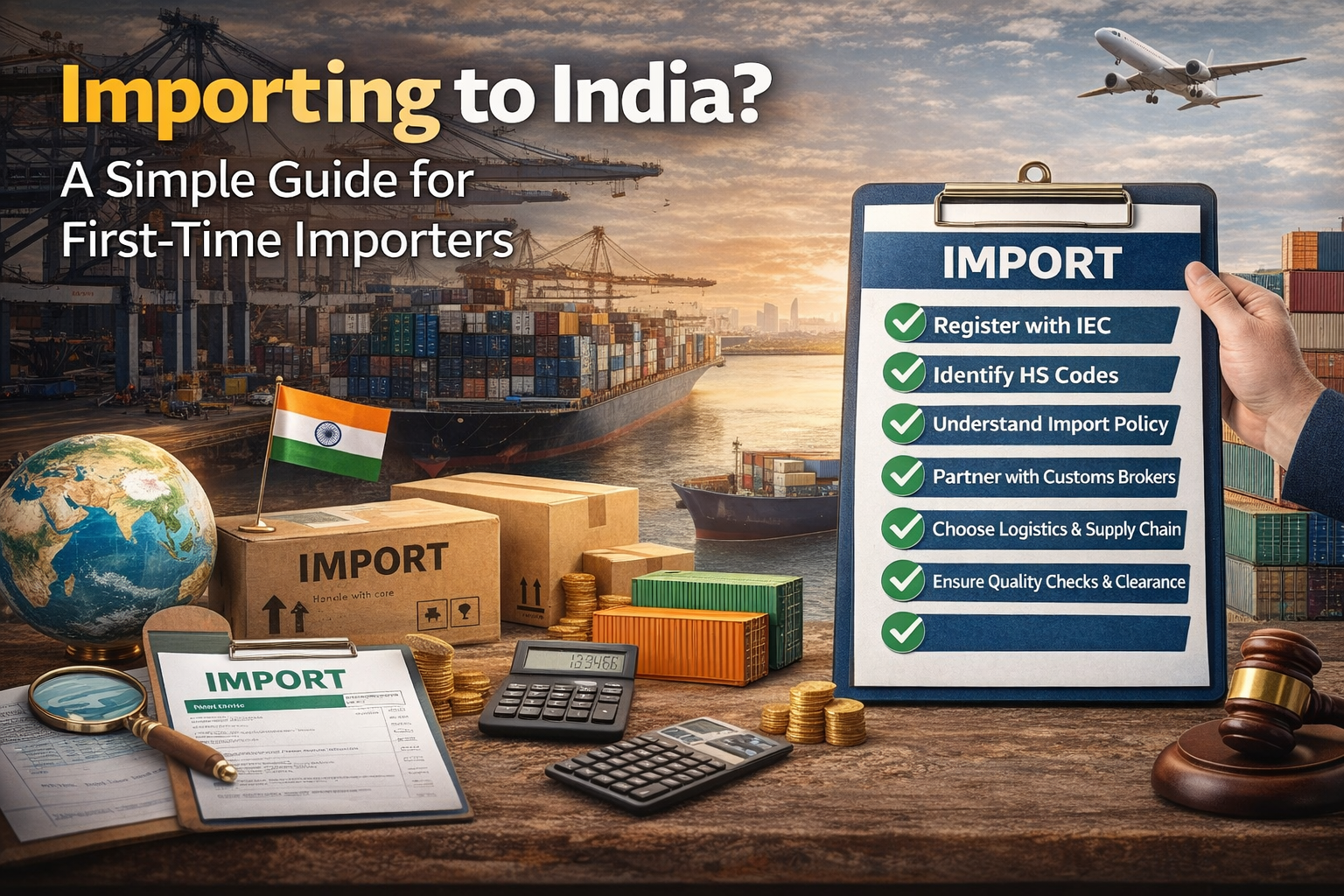
In an increasingly global marketplace, importing goods is a lucrative way to expand businesses and meet rising consumer demands. For first-time importers, navigating India’s trade ecosystem may seem complex. This blog simplifies key steps, regulations, and practical tips to help you import smoothly and compliantly.
🔹 Step 1: Register with IEC
To import into India, obtaining an Import Export Code (IEC) from the DGFT is mandatory. It’s a one-time registration essential for clearing goods through customs.
🔹 Step 2: Identify Your Product and Harmonized Codes
Each product must be classified under an HS Code (Harmonized System). This classification affects customs duties, documentation, and import eligibility.
🔹 Step 3: Understand Indian Import Policy
India maintains a positive list for imports, but certain items may require:
-
Licenses
-
Phytosanitary certificates
-
FSSAI approvals
Products like food items, chemicals, or medical supplies are subject to specific standards.
🔹 Step 4: Customs Duty & Taxes
Import duty varies by product. Besides basic customs duty, additional cess, IGST, and other levies may apply. Accurate classification ensures correct duty computation.
🔹 Step 5: Partner with Customs Brokers
Experienced brokers help with:
-
Documentation
-
Filing bills of entry
-
Duty payments
-
Coordination with ports
🔹 Step 6: Logistics & Supply Chain
Choose between:
-
Sea Freight: Cost-effective for large shipments.
-
Air Freight: Faster but higher cost.
-
Courier/Express: Ideal for samples or small parcels.
🔹 Step 7: Quality Checks & Clearance
Goods may be subject to inspection by regulatory bodies. Advance preparation of certificates accelerates clearance.
🔹 Practical Tips:
✔ Compare multiple suppliers for better pricing
✔ Negotiate Incoterms (FOB, CIF, etc.)
✔ Factor in transit times and insurance
✔ Stay updated on tariff changes
Importing can be powerful when planned right. With compliance and smart logistics, even first-timers can experience smooth international trade flows.




Leave a comment